How Australian Businesses Can Go Digital Without Losing a Thing
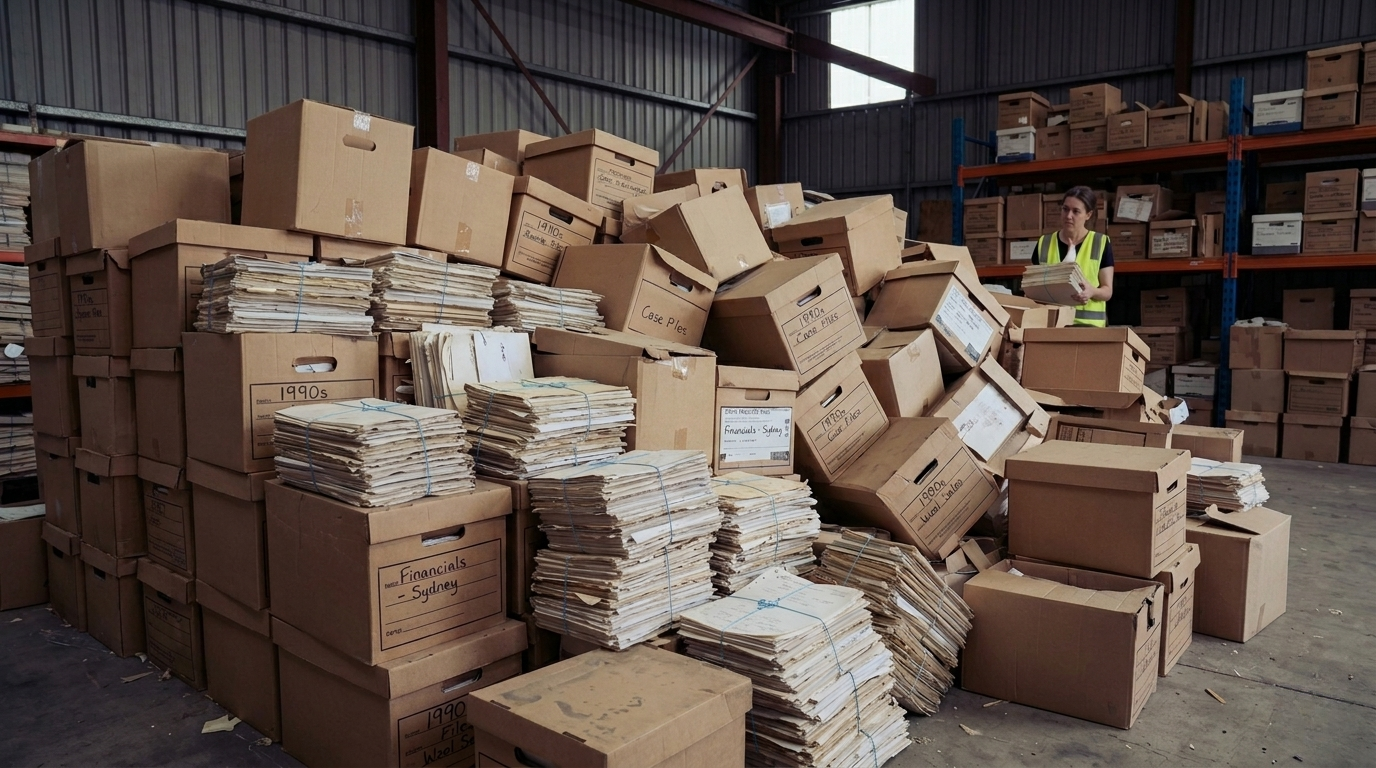
Document Scanning may be the solution you have been looking for. Across Australia, businesses of every size are quietly drowning in paper. Law firms with client files going back decades. Healthcare providers with patient records stacked in rooms that could be used for something far more useful. Not-for-profits with grant paperwork from five funding cycles ago. Council offices with archives that nobody can quite remember the system for.
The paper builds up gradually and then one day you realise it is running you rather than the other way around. Document scanning can quickly relieve you of this burden.
This guide is here to help you do something about it. We will walk through why paper-heavy record keeping costs you more than you realise, what a proper document digitisation process actually looks like, how to handle your paper records responsibly once they are scanned and what to look for when choosing someone to help you through it. And yes, we will answer the questions that people always ask but sometimes feel a bit awkward raising.
Why Physical Files Are a Bigger Problem Than You Think
Most businesses know on some level that their paper situation is not ideal. What they often do not realise is quite how much it is costing them, in money, time and risk.
The storage bill is higher than it looks. Offsite document storage feels like a small recurring expense until you add it up over five or ten years and realise you have spent thousands keeping records that are never actually accessed. And that is before you factor in the floor space those filing cabinets are occupying inside your own office, space you are paying rent on every single month.
Finding things takes an unreasonable amount of time. We have all been there. A client calls asking about a specific agreement from four years ago. Someone needs to pull an invoice for an audit. A staff member is trying to verify what was agreed at a meeting in 2019. Hunting through physical files for any of these things is a genuine productivity drain and it is one that most businesses have simply accepted as normal when it does not need to be.
Paper is fragile in ways we do not think about until it is too late. A flood. A fire. A burst pipe. A roof leak. These things happen and when they do, a paper archive can be gone in a matter of hours. Insurance can replace a lot of things, but it cannot give you back twenty years of client records or the original signed contracts for your key supplier relationships.
The privacy risk is real and growing. Under the Australian Privacy Act, businesses have obligations around how personal information is stored and who can access it. A physical file sitting in a cabinet or a storage room is genuinely difficult to control. Anyone with physical access to the space can potentially access the records. Digital systems allow you to manage permissions, track access and demonstrate compliance in a way that paper simply cannot match.
Remote and hybrid working has changed everything. The shift toward flexible work arrangements that accelerated over the past several years has made paper record keeping even more problematic. A document that is sitting in a filing cabinet at the Wollongong office is completely inaccessible to a team member working from home in Sydney or a colleague visiting a client in Melbourne. Digital records are available wherever your people are.
What Document Scanning Actually Involves
A lot of people picture document scanning as someone running pages through a home printer scanner one at a time. Professional document scanning is a completely different thing.
Here is what a proper process actually looks like from start to finish.
Preparation comes first. Before a single document goes through a scanner, everything needs to be organised and physically prepared. That means removing staples and paper clips, unfolding pages, flattening documents that have been rolled or creased and identifying anything that needs careful handling because it is fragile, oversized or in poor condition. This step matters because what goes in disorganised comes out disorganised and a chaotic digital archive is just a more expensive version of a chaotic paper one.
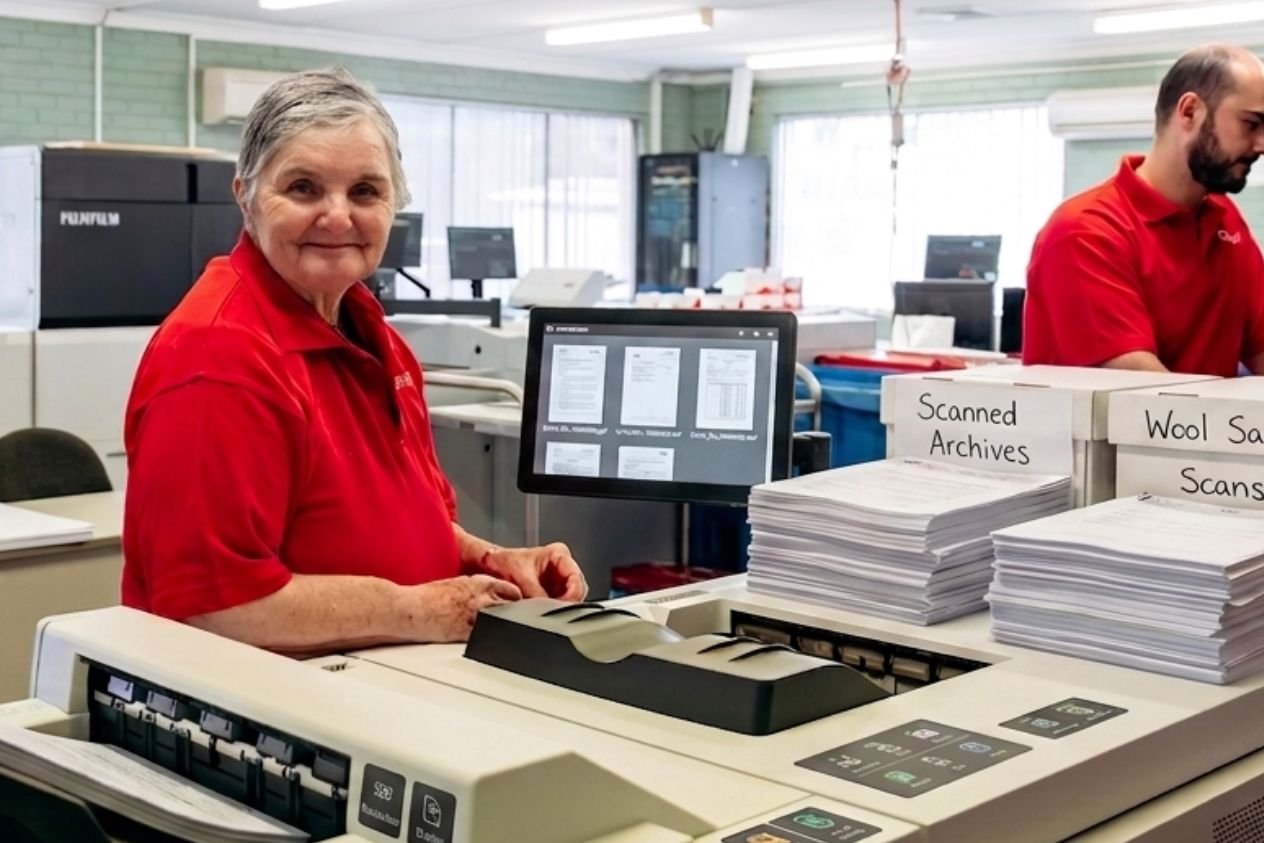
Scanning is done at high resolution. Professional scanning equipment captures documents at a resolution that preserves all the detail, including handwritten notes in the margins, stamps and signatures, fine print and faded ink. High volume equipment can process large batches efficiently, which matters when you are dealing with years-worth of accumulated records.
Indexing is where the real value is created. This is the step that most people do not think about but that makes the biggest difference to how useful your digital records actually are. Every scanned document needs to be named and catalogued in a way that makes it findable. Whether that is by date, document type, client name, project reference or any other structure that reflects how your business actually works, the indexing system needs to be built around you. A well-indexed digital archive means you can find what you need in seconds. A poorly indexed one means you are still hunting, just on a screen instead of in a drawer.
Optical character recognition makes documents searchable. Modern scanning services use OCR technology to make the text within scanned documents searchable. So rather than knowing you need the third document in the second folder of the client file marked with a yellow sticker, you can simply search for the client name, a date, a reference number or a key phrase and have it appear instantly.
Delivery happens in a format that suits you. Delivery is flexible and secure. Upon completion, your scanned files will be made available through a dedicated OneDrive folder for download. Where required, files can also be supplied on USB drives or an external hard drive. An additional backup copy will be provided on a separate USB drive to ensure data security and business continuity.
At Flagstaff Print, Mail and Digital, we take the time to understand how your records are currently organised and what you need to be able to do with them once they are digital. There is no point in creating a digital archive that does not match the way your team actually works.
What Happens to the Paper Once Everything is Scanned?
This is the question that comes up in almost every conversation about document digitisation, and it is a fair one.
The answer depends partly on what kind of records you have. Some documents carry legal or regulatory requirements that mean physical originals need to be retained for a set period, even once they have been scanned. A legal or compliance adviser can help you work out what applies to your specific situation and industry.
For a large proportion of business records, however, once the digital copies exist and have been verified, the paper originals can be securely destroyed. And that word, securely, matters more than most people realise.
Putting confidential documents in the recycling bin is not compliant. Under Australian privacy legislation, businesses are required to take reasonable steps to destroy or de-identify personal information that is no longer needed. Simply throwing paper records away, even in a recycling bin rather than general waste, leaves information accessible in a way that does not meet that obligation. This includes things like client details, employee records, financial information and any other data that relates to identifiable individuals.
Secure shredding means genuinely unrecoverable destruction. A professional shredding service destroys documents in a way that makes reconstruction impossible. Cross-cut or micro-cut shredding reduces paper to fragments so small that reassembly is simply not feasible. And a reputable service will provide documentation confirming that destruction has taken place, which matters if you ever need to demonstrate compliance to a regulator or auditor.
At Flagstaff Print, Mail and Digital, secure shredding is part of the same end-to-end service as our scanning work. Once your records are digitised and you are satisfied with the result, we take care of responsible destruction. You do not have to manage multiple providers or worry about the chain of custody for your documents.
Which Businesses Benefit Most?
Honestly? Almost any business that has been operating for more than a few years and still relies on physical records will see meaningful benefits from digitisation. That said, there are some situations where the case is especially clear.
Professional services firms. Lawyers, accountants, financial planners and similar businesses accumulate client files over years and decades. The volume of paper involved tends to be significant, the information involved is often highly sensitive, and the need to retrieve specific documents quickly is a day-to-day reality of the job. Digitisation makes retrieval faster, access more controlled and storage far less physically demanding.
Healthcare and aged care providers. Patient and resident records need to be managed carefully for both clinical and compliance reasons. Staff need to be able to access relevant history quickly. Privacy obligations are particularly strict. Digital records support all of these needs in a way that paper files simply cannot.
Government agencies and councils. Public sector bodies often hold large historical archives, face strong accountability requirements and need to be able to provide records in response to formal requests. Digital archives are easier to search, audit and share in a controlled way.
Not-for-profit organisations. Not-for-profits often operate with limited administrative capacity and limited physical space. Digitising records reduces the burden on staff and frees up space for the work that actually matters.
Businesses in transition. If you are relocating, downsizing, merging with another organisation or going through any kind of significant operational change, digitising your paper records beforehand can dramatically reduce the volume of physical material you need to move, manage or sort through. It is one of those things that is much easier to do before the disruption rather than in the middle of it.
What to Look for in a Document Scanning Partner
Choosing the right provider matters, because a poorly executed digitisation project can create as many problems as it solves. Here are the things worth asking about.
How is security managed throughout the process? Your documents may contain genuinely sensitive information. You need to understand how access is controlled during preparation, scanning and delivery, and what happens if something goes wrong.
What does quality assurance look like? How does the provider check that scans are legible, complete and accurately indexed before they are delivered to you? A process that catches errors before delivery is far preferable to discovering a problem months later when you actually need to find something.
How flexible are they around your systems and naming conventions? Your business has its own way of organising information. A good provider adapts to that rather than expecting you to adapt to a generic system that does not reflect how your team actually works.
Can they handle the full process? Managing separate providers for scanning, indexing and secure destruction adds complexity and potential gaps in the chain of custody for your documents. An end-to-end service simplifies the whole thing.
What is the social value of your choice? For businesses with social procurement commitments, or simply a genuine interest in directing their spending toward organisations that create positive outcomes in their community, this is worth considering. Not all providers are equal in this regard.
The Social Value of Choosing Flagstaff
Flagstaff Print, Mail and Digital is a social enterprise operated by The Flagstaff Group, a not-for-profit based in Wollongong with a mission to provide life skills and employment for people with disability.
Every job that comes through our doors contributes to meaningful, supported employment for people who bring real dedication and capability to their work. When you choose Flagstaff, you are not just getting a document scanning and shredding service. You are investing in a team of people who take genuine pride in what they do, and you are supporting an organisation that believes every person deserves the opportunity to contribute.
For businesses that are navigating social procurement requirements, or that simply want to know their spending is doing something good in the world, we make that easy.
Getting Started Is Simpler Than It Sounds
We know the thought of tackling years of accumulated paper can feel overwhelming. Where do you even begin? How long will it take? Will it disrupt normal operations?
The honest answer is that the hardest part is usually just deciding to start. Once that decision is made, a professional service can take most of the work off your hands. We can work through large volumes of documents methodically, around your schedule, with minimal disruption to your team.
The first conversation is just that, a conversation. Tell us what you have, what you need and what outcome you are working toward. We will help you figure out the best approach and what the process will look like for your specific situation.
If the filing cabinets are full, the offsite storage bill keeps arriving, or you are simply tired of not being able to find things when you need them, it is time to do something about it.
Get in touch with the Flagstaff Print, Mail and Digital team today.
Visit flagstaffprintandmail.com.au/document-scanning or call us on 02 4272 0257.
We would love to help.
Frequently Asked Questions
How much does document scanning cost?
Pricing depends on the volume of documents involved, any document preparation required (such as removing staples, paper clips, bindings, and repairing damaged pages), the level of indexing required, the output format you need, and whether secure shredding is included. Because every job is different, we provide tailored quotes rather than a flat rate.
The best way to get an accurate picture of the cost is to get in touch and describe what you have. In most cases, businesses find that the cost of digitisation is quickly offset by reduced storage expenses and the time savings that come with being able to find things instantly.
How long does the scanning process take?
This depends entirely on the volume of documents and the complexity of the indexing required. A small batch of current business records might be turned around in a matter of days. A large historical archive spanning multiple decades will take longer. When we scope a project, we will give you a realistic timeline based on what is actually involved. We can also discuss staging the work if you need to prioritise certain records or manage the process around your operational schedule.
Do I need to prepare my documents before they are collected?
Not necessarily. Part of our service is preparing documents for scanning, which includes removing fasteners, organising loose pages and identifying anything that needs special handling. That said, if your records are already reasonably well organised by category or date, letting us know the system you have been using helps us build an indexing structure that reflects your existing approach rather than starting from scratch.
What file formats will my scanned documents be in?
PDF is the most common format for scanned business documents, and searchable PDF in particular is what most businesses need. That said, we can discuss output formats based on what your existing systems support and how your team will be accessing the files. If you use a specific document management platform, we can talk through what works best for that environment.
What is OCR and do I need it?
OCR stands for optical character recognition. It is the technology that reads the text within a scanned image and converts it into actual searchable text, so you can search a document for a word, name, date or reference number and have the system find it for you. For most business records, this is genuinely worth having. It is what transforms a digital archive from a pile of image files into something you can actually use efficiently. If you are scanning large volumes of records that you will need to search through, OCR is not optional, it is essential.
Can you scan documents that are in poor condition?
Yes, though some care is required. Fragile, torn, faded or damaged documents need to be handled differently to standard records. We identify these during preparation and treat them accordingly. Very badly deteriorated documents may have limitations in terms of what can be captured, but we will always let you know upfront if there are any concerns about specific materials.
What happens to my documents while they are being scanned? Are they secure?
Security and confidentiality are taken seriously throughout the entire process. Documents are handled by our team and are not accessible to third parties. If you have specific concerns about security protocols, particularly for highly sensitive records such as legal, financial or health information, we are happy to talk through exactly how the process works so you can feel confident before anything leaves your premises.
Do I have to send all my documents at once?
Not at all. Many businesses prefer to approach digitisation in stages, starting with the most critical or most frequently accessed records and working through older archives over time. We can structure a project to suit your preferences, budget and operational realities. Some businesses also choose to digitise incoming records on an ongoing basis alongside clearing a backlog of older material.
How will I receive my digital files?
Delivery is flexible and secure. Upon completion, your scanned files will be made available through a dedicated OneDrive folder for download. Where required, files can also be supplied on USB drives or an external hard drive. An additional backup copy will be provided on a separate USB drive to ensure data security and business continuity.
What if I am not sure which records I need to keep and which can be destroyed?
This is a genuinely common question and a sensible one to ask. Record retention requirements vary depending on the type of document, the industry you operate in and whether there are specific regulatory or legal obligations that apply. We are not able to provide legal or compliance advice, but we do recommend speaking with your accountant, lawyer or a records management specialist before authorising destruction of any records. What we can do is scan and securely store your digital copies while you work through the retention question, so nothing is destroyed prematurely.
How do I know the digital files are accurate before the originals are destroyed?
We strongly recommend that clients review and verify their digital files before any paper originals are destroyed. We will not proceed with shredding until you have confirmed you are satisfied with the quality and completeness of the scanned records. This is not just good practice, it is the only responsible way to approach the process.
Can you handle large volumes of records? We have decades worth of archives.
Yes. Large-scale archiving projects are something we manage regularly. Whether you have a few boxes or an entire room full of records going back thirty years, we can scope and schedule the work to handle it systematically. For very large projects, we will typically discuss a staging plan with you so that the most important records are prioritised and the project fits within your operational and budget parameters.
What types of documents can you scan?
We can scan a wide range of document types including standard A4 correspondence and files, contracts and agreements, invoices and financial records, HR and personnel files, client and patient records, technical drawings, bound documents, and more. If you have something a little outside the ordinary, just ask. Oversized formats and unusual materials may require different handling, but we will let you know what is involved.
Is document scanning right for us if we are a small business?
Absolutely. There is no minimum volume required to benefit from digitisation. Small businesses often feel that their paper situation is not bad enough to warrant a professional service, but in practice the time savings and reduced clutter are just as valuable at a small scale. And for small businesses without dedicated administrative staff, being able to find a document in seconds rather than spending twenty minutes searching for it can make a real difference to how the day runs.
What is the difference between document scanning and just photographing documents on my phone?
The results look similar on the surface but are very different in practice. Phone photography produces images of inconsistent quality, resolution and orientation. There is no indexing, no OCR, no quality checking and no systematic naming convention. The result is typically a folder full of image files that are hard to navigate and impossible to search. Professional scanning produces properly structured, searchable, consistently formatted files that are built to be used and retrieved, not just stored.
What does the secure shredding process involve?
Secure shredding uses industrial shredding equipment that reduces documents to fragments too small to be reconstructed. This is a significantly higher standard of destruction than office shredders, which produce strips that can in theory be reassembled. Our secure shredding service ensures that your confidential information is destroyed in a way that meets privacy obligations and protects the people whose information you hold.
Why should I choose Flagstaff over a larger national provider?
A few reasons. We provide a personal, responsive service where you deal with real people who know your project rather than a call centre. We are locally based in the Illawarra region, which matters when it comes to the logistics of collecting and returning your documents. And we are a social enterprise, which means every job supports meaningful employment for people with disability. If you are looking for a provider that delivers quality work and creates genuine social value at the same time, we think that is a pretty compelling combination.