How Long Do You Have to Keep Business Records in Australia?
Why Record Retention Matters
Keeping records is not just good practice. For most Australian businesses, it is a legal obligation, and failing to keep the right records for the required period can create real problems. Records can be paper based or scanned to digital records.
The Australian Taxation Office requires businesses to keep records that explain their income, deductions, and tax positions. Under the Income Tax Assessment Act, the general requirement is to retain most tax-related records for five years from the date they were prepared, obtained, or the transaction was completed. For capital gains tax purposes, records often need to be kept for the life of the asset plus five years.
Employment records carry separate obligations under the Fair Work Act. Pay slips, records of hours worked, leave balances, and similar employment documents must be kept for seven years. These records need to be readily accessible if an employee requests them or if a dispute arises.
The Australian Privacy Act requires that personal information be kept only for as long as it is needed for the purpose for which it was collected, and then destroyed or de-identified. This creates an obligation not just to retain records, but to actively manage and dispose of them appropriately.
Industry Specific obligations add further layers. Healthcare providers are subject to requirements under state and territory health records legislation. Financial services businesses have obligations under the ASIC and APRA frameworks. Government agencies and councils operate under specific public records legislation. Legal practices have professional obligations around client files.
Common Record Categories and How Long to Keep Them
The following table gives a general guide to common record types and their typical minimum retention periods under Australian law. This is a starting point, not a definitive legal reference. Your specific situation may require different retention periods.
Again, these are general guides. The specific requirements that apply to your business depend on your industry, structure and circumstances. If you are unsure, take advice before destroying anything.
The Problem with Paper Based Compliance
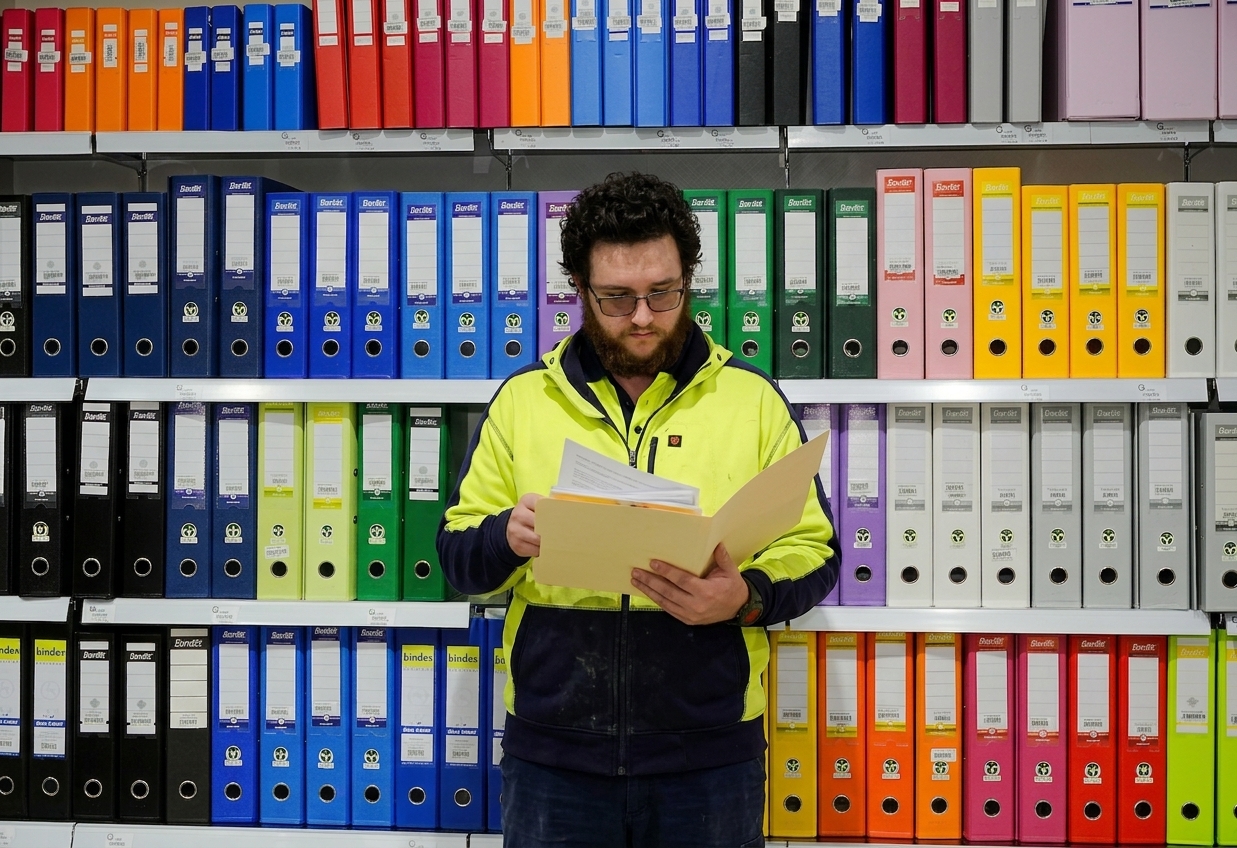
Managing record retention in physical form creates a practical problem that many businesses struggle with: it is very difficult to know with confidence what you have, when it was created, and when you are permitted to destroy it.
Filing cabinets do not come with expiry dates. Documents from different time periods get mixed together. Records that should have been destroyed five years ago sit alongside records that need to be kept for another decade. And when an audit, a legal dispute or an access request arrives, the process of finding and verifying what you have can be genuinely chaotic.
Physical records are also subject to risks that digital records are not. Water damage, fire, theft and simple deterioration are real risks that have caused genuine problems for businesses that assumed their paper archives were safe.
How Document Scanning Creates a Compliant Digital Archive
Professional document scanning addresses the compliance challenge directly by transforming your physical records into organised, searchable digital files that can be managed systematically.
A well-executed scanning and indexing process creates a digital archive where every document is categorised, dated, and searchable. That means you can identify records by type, date and category, apply retention schedules to different document groups, find specific documents quickly in response to an audit or information request, and track when records become eligible for destruction.
The indexing step is where most of the compliance value is created. When documents are scanned professionally, each record is named and catalogued according to a structure that reflects how your business needs to manage them. This might include document type, date, client or project reference, department or other relevant categories. A well-indexed digital archive makes records management practical rather than aspirational.
Optical Character Recognition and Searchability
Modern scanning services use optical character recognition (OCR) technology to make the text within scanned documents searchable. This means that rather than needing to know exactly where a particular record is filed, you can search for a client name, a date, a reference number or a keyword and have the relevant document appear instantly. For businesses responding to formal requests or preparing for audits, this capability is genuinely valuable. You can learn more about how our document scanning service works, including OCR and delivery formats.
When to Destroy Records: Getting It Right
The other side of retention is destruction. Keeping records longer than necessary is not a neutral choice. It creates storage costs, increases your exposure in the event of a data breach or dispute, and may put you in breach of your obligations under the Privacy Act to destroy personal information that is no longer needed.
Secure destruction is not optional. Simply putting confidential records in a recycling bin does not meet the standard required by Australian privacy law. The obligation is to destroy information in a way that makes it genuinely unrecoverable, which means cross-cut or micro-cut shredding by a professional service, not a standard office shredder.
A professional shredding service will also provide documentation confirming that destruction has taken place. This documentation matters if you are ever required to demonstrate to a regulator or auditor that you have managed personal information responsibly.
At Flagstaff Print, Mail and Digital, document scanning and secure shredding are offered as part of the same end-to-end service, so you can move from physical archive to digital records to secure destruction without managing multiple providers or worrying about the chain of custody.
Practical Steps for Getting on Top of Your Records
If your record management situation needs attention, here is a sensible approach to getting it under control.
- Start by taking stock. Understand what you have, how far back it goes, and what categories are represented. This does not need to be precise at this stage, just a realistic picture of the volume and type of material involved.
- Get advice on your specific retention obligations. An accountant can advise on tax and financial records. A lawyer can advise on contracts and legal exposure. Industry bodies often publish guidance on sector-specific requirements. Do not assume that general rules cover your situation.
- Prioritise the scan. Focus first on records that are regularly accessed, carry the highest compliance risk if lost, and are most vulnerable to physical damage. These are your highest-priority candidates for digitisation.
- Build a retention schedule into your indexing. When records are scanned and catalogued, include the retention period in the indexing structure so that records are manageable from the point of digitisation.
- Destroy what is eligible. Once your digital archive is verified and your retention periods are confirmed, eligible physical records can be securely destroyed. Do not put this off, as the ongoing retention of out-of-date personal information poses a privacy risk.
Why Choose Flagstaff
Flagstaff Print, Mail and Digital is a social enterprise based in Wollongong, operated by The Flagstaff Group. The Flagstaff print team provides professional document scanning, indexing and secure shredding services for businesses across Australia, with a particular focus on delivering a personal, responsive service that adapts to how your organisation actually works.
Every job we take on supports meaningful employment for people with disabilities, and for organisations with social procurement commitments, our verified social enterprise status means your spend with us contributes directly to your social value reporting.
To discuss your document scanning and records management requirements, visit flagstaffprintandmail.com.au/document-scanning or call us on 02 4272 0257.

Frequently Asked Questions
How long do I need to keep business tax records in Australia?
Most tax-related records must be kept for 5 years from the date of the transaction or the date the record was prepared. For capital gains tax assets, records typically need to be kept for the life of the asset plus five years. If you lodge a late tax return, the period may be longer. Your accountant can advise on the specific requirements that apply to your records.
Do I have to keep paper originals after scanning?
For most business records, a high-quality digital scan is accepted as equivalent to the paper original. However, some documents may have legal requirements to retain the original, particularly where a wet signature or original instrument is relevant to enforceability. If you are unsure about specific document types, consult a lawyer or records management professional before destroying originals.
Can I destroy personal information once I have scanned it?
Yes, in most cases, once personal information has been digitised and you have verified the quality of the digital copy, the paper original can be securely destroyed if the retention period has passed or the purpose for which it was collected has been completed. The Privacy Act requires that personal information no longer needed for its original purpose be destroyed or de-identified, and that such destruction be conducted securely.
What counts as secure destruction?
Secure destruction means destroying documents in a way that makes the content genuinely unrecoverable. This requires industrial cross-cut or micro-cut shredding, not standard office shredders or recycling. A professional shredding service will provide a certificate of destruction as evidence that the process has been completed.
Is scanning just for large businesses?
No. Small businesses benefit from document scanning just as much as large organisations, often more so, because they typically have less administrative capacity to manage manual record retrieval. There is no minimum volume required to use Flagstaff's document scanning service. Get in touch to discuss what is involved for your situation.
How does choosing Flagstaff support social procurement?
Flagstaff Print, Mail and Digital is a People, Planet First verified social enterprise. Businesses and government agencies with social procurement obligations under NSW or Commonwealth frameworks can direct their document scanning and shredding spend to Flagstaff and count it toward their social value reporting.
Flagstaff Print, Mail & Digital is a full-service commercial print, mail and fulfilment business based in Wollongong, NSW. We are an accredited Australia Post Bulk Mail Partner and a verified social enterprise, serving government, corporate and not-for-profit clients across Australia.