What Is Fulfilment and Warehousing? A Guide for Australian Businesses
What Does Fulfilment Actually Mean?
The word fulfilment is used in many different ways, but in the context of business operations, it refers to the process of receiving, processing, and delivering orders to customers or recipients. In its simplest form, fulfilment covers everything that happens between someone placing an order and that order arriving at its destination.
For product based businesses, fulfilment might involve storing goods in a warehouse, picking the right items when an order comes in, packing them appropriately, generating shipping labels and dispatching them through a carrier network. For organisations managing marketing or communications campaigns, fulfilment might mean storing printed materials, assembling campaign kits with multiple components, and sending them to a list of recipients at a specific time.
What all of these scenarios have in common is that they require physical space, equipment, trained staff, and logistics coordination. That is a significant operational overhead, and it is exactly what a professional fulfilment partner takes off your hands.
What Is Warehousing and How Does It Fit In?
Warehousing is the storage component of the fulfilment equation. Before you can pick, pack and dispatch anything, you need somewhere to keep it. Warehousing provides that space, along with the systems to track what is in stock, manage incoming deliveries, and ensure materials are stored appropriately.
Good warehousing is more than just putting boxes in a room. It involves proper inventory management, so you know exactly what you have and where it is; organised storage systems so items can be retrieved quickly and accurately; receiving processes to check incoming stock against orders; and dispatch coordination to ensure outgoing orders match what was requested.
For businesses managing large print and promotional runs, warehousing at a fulfilment and warehousing facility means those materials are stored and ready to go rather than sitting in your office, taking up space and creating a logistical headache every time you need to send something out.
The Core Services Within Fulfilment
Assembly
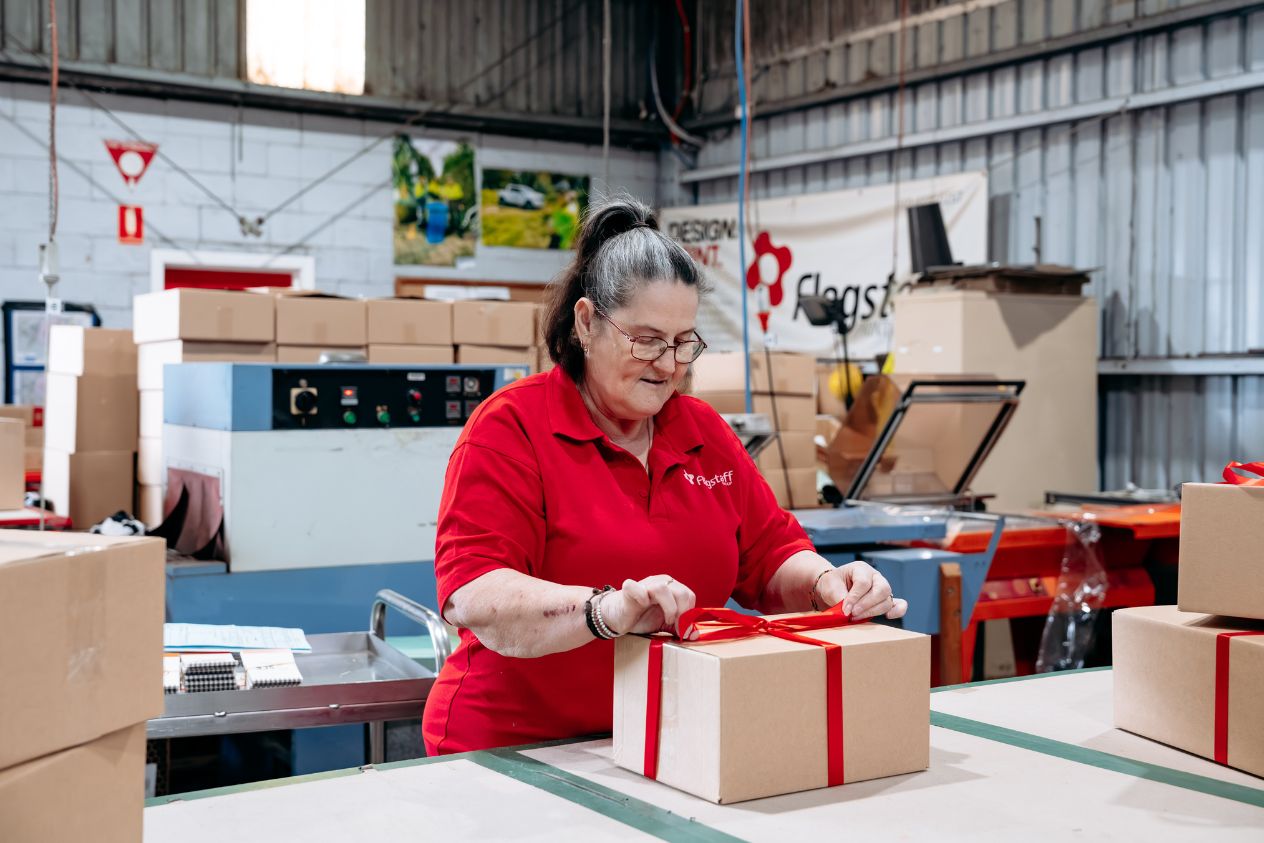
Assembly involves bringing together multiple components into a finished pack or kit ready for distribution. This might be a promotional kit for a product launch, an onboarding pack for new employees, an event delegate bag, or a stakeholder communication that includes a printed report, a covering letter and a reply envelope.
Assembly requires attention to detail, the ability to work through high volumes efficiently, and clear quality-checking processes to ensure every pack that goes out is complete and correct. It is time-consuming work that many businesses find consumes far more staff time and resources than they anticipated when doing it in-house.
Pick and Pack
Pick and pack is the process of taking individual orders, selecting the right products from warehouse stock, and packing them for dispatch. The accuracy of this process matters enormously because errors can cause items to arrive at the wrong address, leading to costs, customer dissatisfaction, and reputational risk.
A professional pick-and-pack service uses systematic processes and quality checks to ensure accuracy at high volumes. For businesses managing ongoing fulfilment needs, this kind of consistent, scalable operation is very difficult to replicate internally without significant investment in space, staff and systems.
Distribution and Delivery
Once items are packed, they need to get to their destination. Distribution services handle the logistics of dispatch, including carrier selection, labelling, tracking and coordination of delivery across Australia.
For organisations managing direct mail or large scale communications campaigns, distribution is closely linked to bulk mail services, so printed materials move seamlessly from production to delivery without requiring multiple providers or coordination effort from your team.
Who Uses Fulfilment and Warehousing Services?
The range of organisations that benefit from outsourced fulfilment is broader than many people expect.
- Government agencies and councils managing regular communications to constituents, distributing public information materials, or fulfilling formal correspondence requirements at scale.
- Corporate businesses run national marketing campaigns that require coordinated distribution of promotional materials across multiple locations and audiences.
- Not-for-profit organisations managing membership communications, donor packs, event materials or program delivery across a distributed geographic footprint.
- Healthcare and aged care providers handling high volumes of patient communications, consent forms or information packs that need to be personalised and sent to specific recipients.
- Businesses of any size managing seasonal campaigns, product launches or promotional activity where the volume and timing of outgoing materials is difficult to absorb internally.
The common thread is that these organisations have a recurring or significant one-off need to get physical materials from storage to recipients, and they want that process handled professionally without needing to build and manage the infrastructure themselves.
How Outsourcing Works in Practice
The process of outsourcing your fulfilment typically begins with a conversation about your needs. A good fulfilment partner will want to understand the volume of materials involved, how frequently you need to dispatch, whether assembly is required and how complex it is, what your delivery requirements look like, and whether you need an ongoing managed service or support for a specific project or campaign.
From there, the partner sets up the systems and processes to receive your stock, store it appropriately, and begin fulfilling orders as they come in. At Flagstaff Print, Mail and Digital, we set up an online portal for our fulfilment clients, giving you full visibility over your inventory and orders without needing to pick up the phone every time you want to know what is in stock or check on a dispatch.
For businesses that also use our print services, the integration between print production and fulfilment is a significant advantage. Materials come off the press and go straight into storage, ready for dispatch, without needing to be transported between suppliers. That kind of end to end management reduces handling, reduces lead times, and removes the coordination burden that comes with managing multiple providers.

The Benefits of Outsourcing Fulfilment
Free Up Your Space
Office and warehouse space costs money. If you are storing marketing materials in a meeting room, using desk space to assemble packs, or paying for storage units to house your print inventory, you are spending more than you need to. Professional warehousing is designed for storage efficiency, and the cost is typically far lower than the equivalent space in a commercial tenancy.
Reduce the Burden on Your Team
Assembling packs, sorting orders and managing dispatch logistics are time-consuming tasks that pull your staff away from higher-value work. For small teams in particular, the time spent on these activities during a campaign or dispatch cycle can be significant. Outsourcing means your people focus on what they are there to do, not on counting boxes and filling envelopes.
Scale Up and Down as You Need
One of the genuine advantages of outsourced fulfilment is scalability. If you have a campaign that requires sending 50,000 pieces in a fortnight, you need the resources to handle it without disrupting normal operations. A fulfilment partner absorbs that volume without requiring you to hire temporary staff, rent additional space or reconfigure your operations for a short-term spike.
Consistent Quality and Accuracy
Professional fulfilment services operate to defined quality standards, with systematic checks at each stage. That means fewer errors, less rework and greater confidence that what you intended to send is what arrived at the other end.
What to Look for in a Fulfilment Partner
Not all fulfilment providers offer the same level of service, so it is worth knowing what to ask.
- Integration with print and mail: if you are already working with a print or mail provider, a fulfilment partner who works alongside them or provides an integrated service will save you significant coordination overhead.
- Visibility and reporting: Can you access real-time information about your inventory levels and order status, or do you have to chase for updates? A portal or reporting system is a sign of a mature operation.
- Flexibility: Can they handle one-off projects as well as ongoing managed services? Can they scale with you if your volumes increase?
- Social value: for organisations with social procurement commitments, a fulfilment partner that is a verified social enterprise adds direct value to your supply chain reporting.
If you are looking for a partner that ticks all of these boxes, you can learn more about how we work at flagstaffprintandmail.com.au/fulfilment-warehouse.
Why Flagstaff
Flagstaff Print, Mail and Digital is a social enterprise operated by The Flagstaff Group, a not-for-profit organisation based in Wollongong. The Flagstaff print team has a combined 130 years of experience in print, mail and fulfilment, and we provide meaningful, supported employment for more than 20 people with disability.
When you choose Flagstaff for your fulfilment and warehousing needs, you are getting a professional, scalable service backed by a team that genuinely cares about the work they do. You are also supporting social procurement outcomes that contribute to your organisation's social impact reporting.
We provide fulfilment and warehousing services alongside commercial printing, bulk mail and direct mail, and document services, so we can manage your entire print-to-distribution workflow under one roof.
To talk through your requirements and find out how we can help, visit flagstaffprintandmail.com.au/fulfilment-warehouse or call us on 02 4272 0257.